The packing recording is useful for checking details that shipping records cannot show, including:
A damage claim is easier to handle when you have the order fulfillment recording from both sides of the shipment. You need to know how the item looked before it left your warehouse, then compare that with the damage reported after delivery.
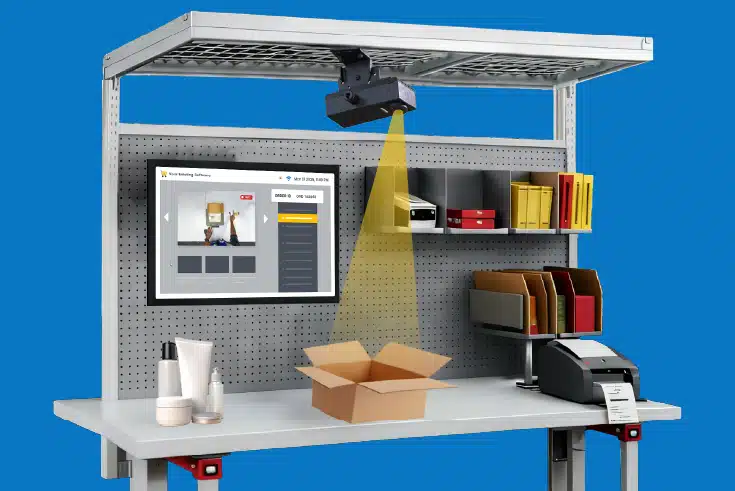
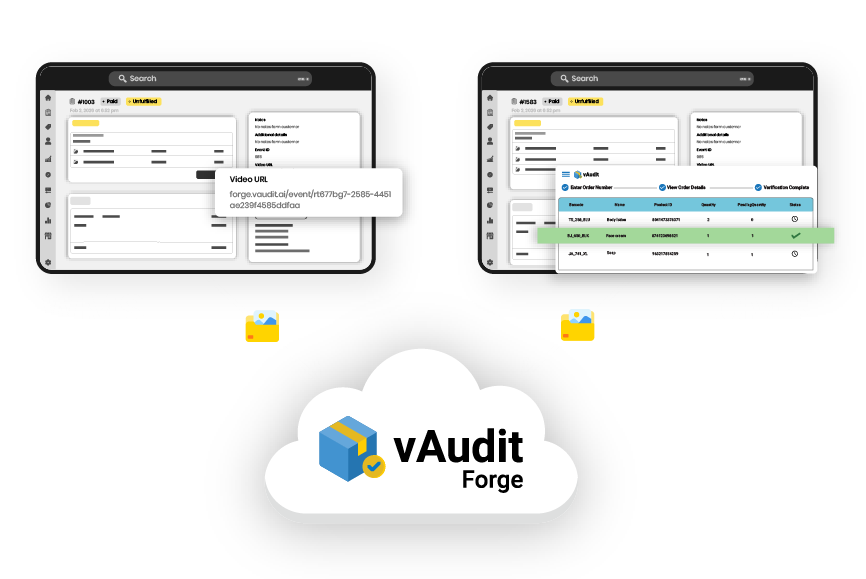
Mount the vAudit packing video recording system above your pack station and trigger recording from within your WMS, OMS, or any other existing system screen.
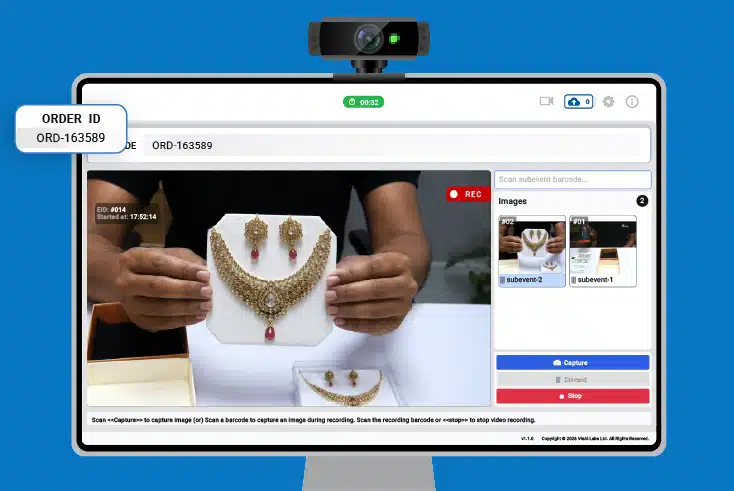
The packer scans the order ID to begin video recording
vAudit starts recording while the packing is in progress
Once all the items go in, the packer seals the box and sticks the label
The video ends when the packer completes the order
vAudit stores the packing video on its cloud portal for easy retrieval by order ID
See how easily vAudit fits into your fulfillment flow
Order-Linked Video
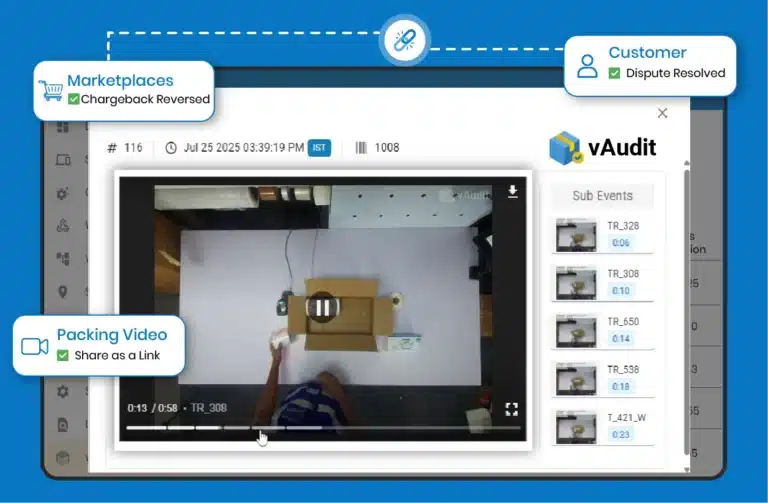
Each packing video is linked to the order ID, so the recording can be easily retrieved during a dispute.
Image Capture During Packing
Capture additional images while the video recording is in progress to show item condition and label.
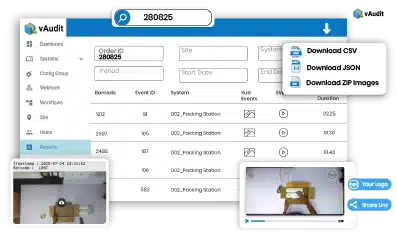
Searchable Video Proof
Search by order ID to pull up the packing video when a customer reports damage days or weeks later.
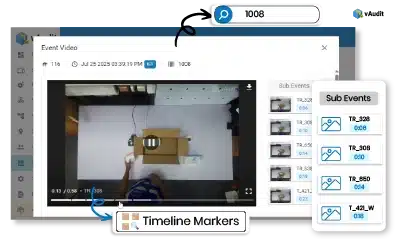
Timeline Markers
Key moments in the packing video are easier to view without watching the entire recording.
Secure Video Sharing
Share the relevant shipment video with a customer, client, or carrier as a secure URL for easy viewing.
vAudit’s cloud portal lets you control your devices remotely and manage all the packing videos in a centralized platform. You get enterprise level security for your data so you don’t have to worry about unauthorized access to sensitive customers/client information.
For ecommerce shipping, video proof of shipment is a recording tied to a specific order that shows the item and its packing before the parcel leaves the warehouse.
It adds information you will not find in a tracking event or order status. You can look back at how the product appeared during packing, what was placed around it for protection, and whether anything was changed before the box was closed.
That becomes useful if damage is reported later. Instead of starting the review only with photos taken after delivery, you also have a view of the same packing video from before carrier handoff.
You cannot prove every type of damage with a packing station camera. Internal damage, for example, may not be visible at all. What you can do is create strong evidence of the item’s visible condition immediately before shipping.
A useful warehouse packing recording should do three things:
If a customer later reports a cracked screen or scratched surface, the packing video becomes the evidence recorded at the point of shipping to compare with the delivery photos.
Packing video can help with a damage claim when it clearly shows the entire item packing and handling.
For example, a packing video should show the item before it went into the box, how it was packed with adequate protective layers inside the parcel, and the condition of the packaging before shipping.
The packing videos and images become even more important when major carriers like UPS asks for photos of the damaged item and its packing, the shipping label, and the outside of the package. FedEx requests photos, proof of value, and an inspection report. USPS also requires evidence of damage and proof of value for applicable claims.
The recording needs to show the entire packing process clearly. A camera covering the whole table is of little use if the product itself is too small or hidden behind the box.
For most damage claims, you want to be able to see:
Do not assume that packing video by itself will satisfy a carrier claim.
UPS, FedEx, and USPS are built mainly around photos, shipment information, proof of value, and other supporting documents. UPS specifies photos for its damage documentation process. FedEx asks for photos and supporting records and may request an inspection report. USPS accepts damage evidence and proof-of-value files through its claim process.
Video proof of shipment is best kept as additional evidence from before shipping. It may show the product condition and packing details that were never captured in the customer’s photos, but you should still submit everything the carrier specifically asks for.
A packing video can show what was visible before carrier handoff. It cannot show what happened inside a sorting facility, truck, or delivery vehicle.
What the video can do is give the claim review a useful starting point. You can compare:
That comparison may help you understand whether the reported damage appeared after the shipment left your warehouse, but the carrier still decides the claim based on the evidence and its own process.
FedEx specifically tells claimants to keep the original packaging because an inspection may be required. USPS also requires supporting evidence for damaged shipments.
Do not review the video and customer photos as two separate files. Compare the same part of the product in both.
If the customer reports a cracked corner, damaged screen, or scratched surface, find the clearest view of that same area in the packing video.
Then work through the evidence:
If a surface was never visible in the packing video, the recording cannot tell you what condition that surface was in before shipping.
UPS and FedEx both place importance on photos of the damaged item and its packaging during damage-claim reviews, which is why comparing the pre-shipment view with the post-delivery evidence can be useful.