
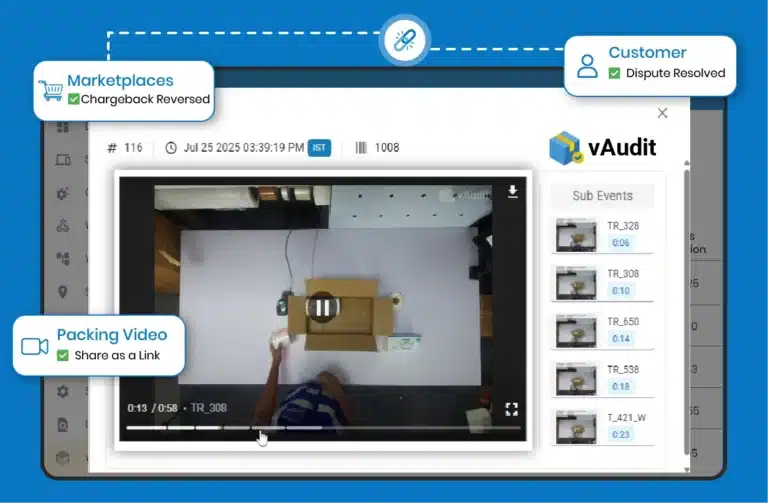
Order fulfillment recording is a video of how an order was packed, saved against its order ID or another unique identifier. vAudit’s packing video recording system films the packing and marks each item scan on the video timeline with a still image. You can review the item packing and use it as video proof for customer disputes.
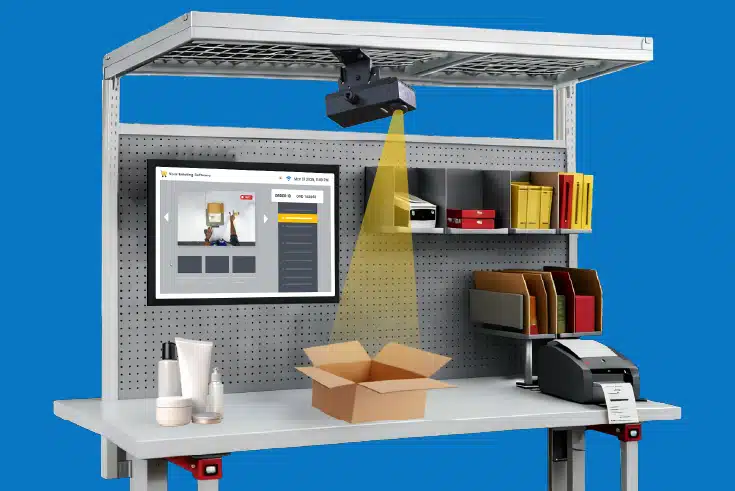
Dedicated vAudit hardware for recording the order packing process at the packing station.
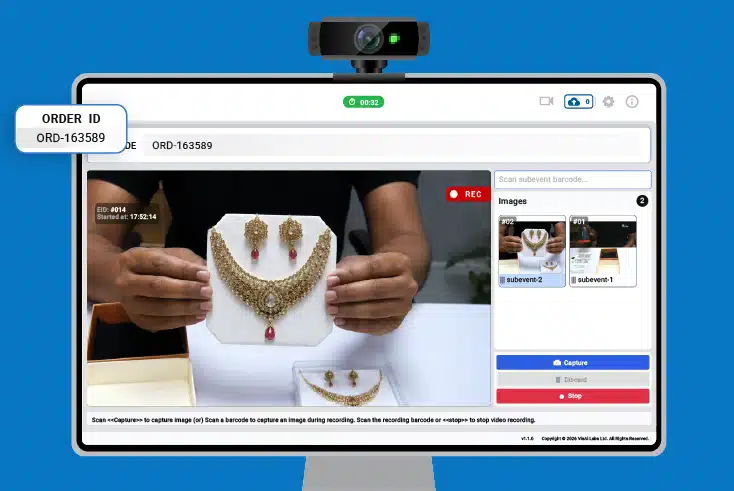
A desktop application that records packing videos using your webcam and laptop/desktop.
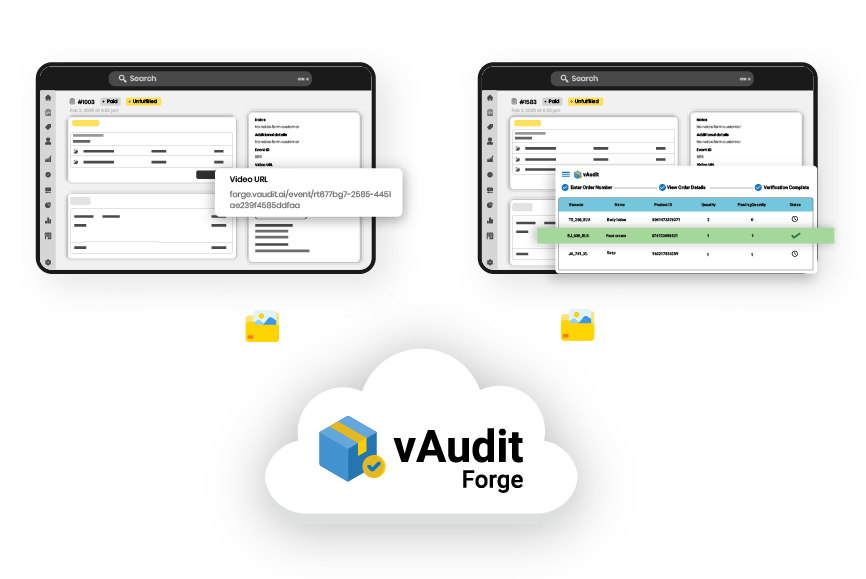
vAudit Forge manages the packing videos you record on your vAudit HD and Desk devices. It becomes an easy to access cloud platform that not only acts as a storage solution but also lets you generate video links for ease of sharing the video proof with your customers and manage devices, users, and deploy workflows remotely.
Scan the order ID to begin the packing session.
Capture images while recording whenever you scan a SKU barcode
Show the item condition, protective material and the shipping label in the camera view.
End the recording when packing is complete. The video and captured images are stored on cloud.
During a claim, search the order ID, find the exact packing video, and review the clip to answer the customer query.
Scan/screen based recording triggers
Start each packing video from an order barcode scan or directly from your OMS, WMS, or ERP workflow.
Timestamped packing images
Capture still images during the packing process when an item barcode is scanned. Each image includes a timestamp for clearer order verification.
Timeline markers on video
You can jump straight to the moment a particular product was packed instead of watching the entire recording.
Cloud-based video storage
Authorized users search, retrieve, and review order recordings from one cloud platform.
Shareable packing video links
Create a shareable link for the relevant packing video and send it to a customer, marketplace, or client when a missing-item dispute needs review.
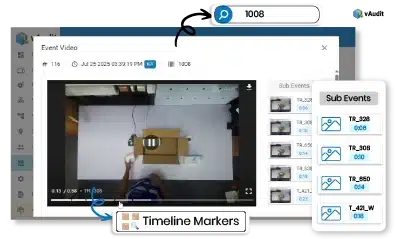
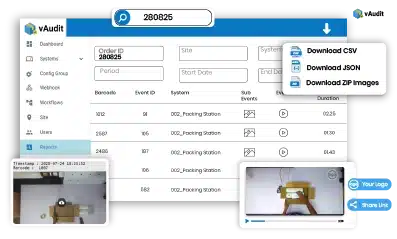
With vAudit’s order fulfillment recording, you find the exact packing video for that order simply by searching by the order ID. This searchable visual proof of order fulfillment lets you answer customer queries with clarity and resolve them quickly.
See how customers use the vAudit order fulfillment recording to capture their packing process and verify customer claims with video proof.

SOC 2 certified cloud platform
vAudit Forge is a SOC 2 certified cloud platform with role-based access and activity logs. Your order packing video and additional images are stored with enterprise level security.
Order fulfillment recording is the practice of recording the physical packing or preparation of an individual order and associating that video with the order’s unique identifier.
An order ID, shipment number, tracking reference, or barcode acts as the connection between the transaction and its video.
A recording shows what physically happened during fulfillment, such as which products were handled, how many units were packed, the condition of an item during packing, the packaging used, and how the parcel was completed.
This creates a different type of record from an OMS or WMS log. Digital systems show what was scanned or processed, while fulfillment video documents the physical activity associated with that order.
An order fulfillment recording clearly shows the relevant packing activity, and provides enough context to understand what happened during packing.
Several factors improve the usefulness of the record:
For example, a missing-item claim requires a clear view of the item being placed into the parcel. A wrong-item claim requires enough detail to identify the product or variant. A condition-related claim needs a suitable view of the product during packing.
Video does not automatically determine the outcome of a marketplace, carrier, insurance, or payment dispute. Evidence requirements differ by organization. The recording instead provides a documented source that forms part of the wider claim record.
A packing photo captures one moment, while an order fulfillment recording shows the sequence of events that took place during packing.
A photo is useful for documenting a specific detail, such as product condition, quantity arranged in a box, or the parcel after packing. However, it does not show what happened immediately before or after that image was taken.
Video adds sequence and context. It shows products being handled, items entering the parcel, changes made during packing, and the progression from an open order to a completed package.
Order fulfillment recording needs enough image detail to identify the information relevant to the fulfillment event. Higher resolution alone does not guarantee a useful recording.
Camera position, lighting, field of view, obstruction, motion, and the size of the product all affect whether the video is useful later.
A good recording should make the relevant action easy to follow. Small products or product identifiers require a closer and clearer view than large cartons. Condition documentation also requires enough detail to distinguish marks, damage, seals, or other characteristics that matter to the review.
Camera placement therefore deserves as much attention as resolution. A high-resolution camera aimed too far from the work area still produces weak evidence.
Before introducing order fulfillment recording, businesses should define what they need to document, how recordings will be matched to orders, and how those recordings will be retrieved later.
Important questions include:
A collection of order recordings can show whether the same type of packing problem is happening repeatedly and where it occurs in the process.
For example, repeated reviews may reveal that:
Small accessories are often missed Similar SKUs are being confused Quantity errors happen on particular order types Protective material is regularly skipped Repacking creates errors Certain packing steps are completed out of sequenceThis moves video beyond individual claim review. The recordings become a source for examining the actual physical process behind recurring fulfillment errors.
The most useful analysis focuses on patterns across multiple orders rather than treating every video as an isolated incident.