
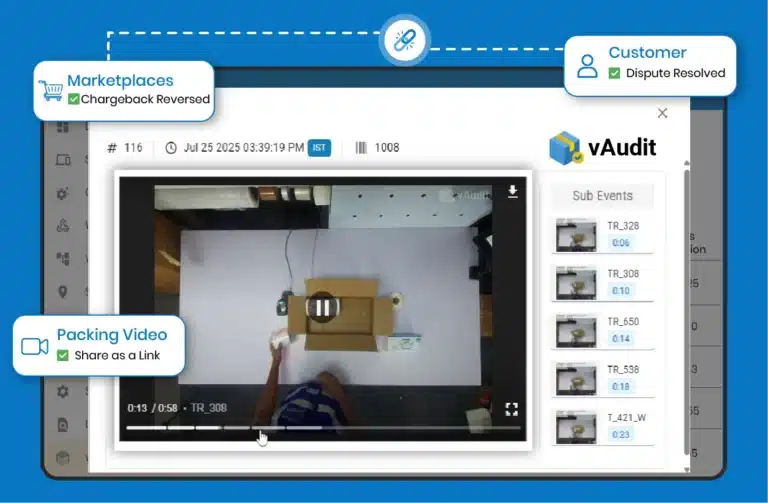
A returns validation video system records the unboxing and inspection of returned items and gives video proof for customer dispute resolution. The video shows whether the returned item matches the approved return, and the condition in which the item was received. It also gives the return team a visual record before the item is graded, restocked, repaired, or disposed.
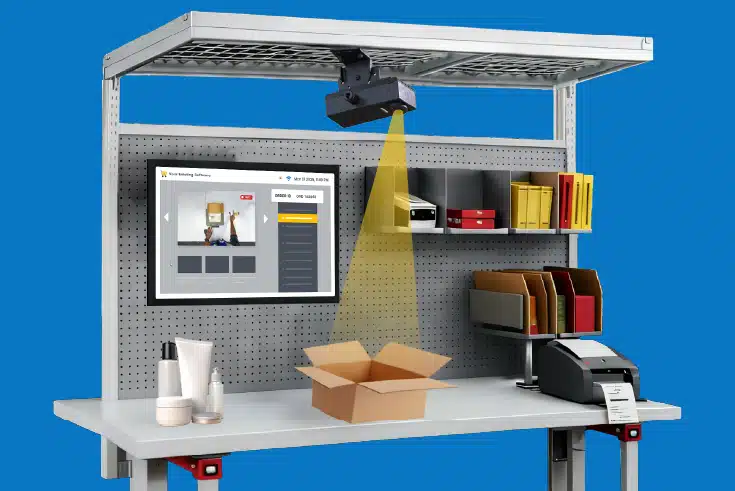
Dedicated vAudit hardware for recording the order packing process at the packing station.
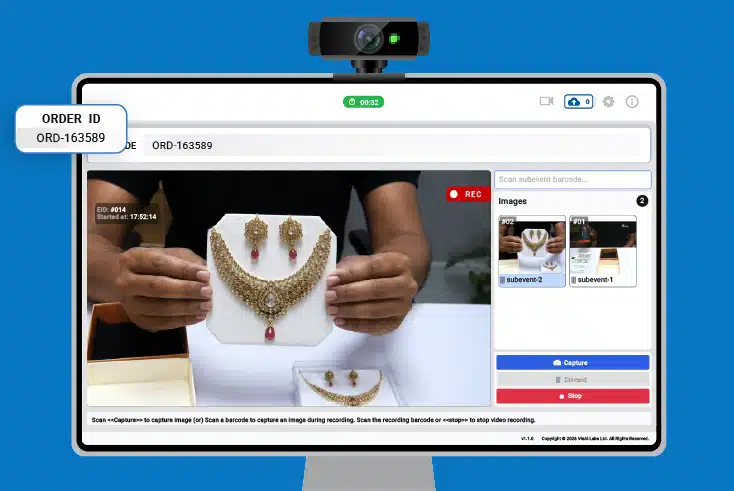
A desktop application that records packing videos using your webcam and laptop/desktop.
vAudit Forge manages the packing videos you record on your vAudit HD and Desk devices. It becomes an easy to access cloud platform that not only acts as a storage solution but also lets you generate video links for ease of sharing the video proof with your customers and manage devices, users, and deploy workflows remotely.
Return grader begins the item inspection
vAudit starts recording right from the unboxing
Grader points out to defects, damages or item swaps on video
Video ends when the return is successfully processed
Support agent shows inspection proof during refund denials
RMA or order ID linked video
Scan the RMA or order ID to start a separate inspection session and save the finished video under the same return reference.
Timestamped additional image capture
Capture a still image during the video when damage, wear, seal condition, serial details, or missing components need a closer visual reference.
Original pack comparison
Retrieve the original packing video and the return inspection for the same order to compare item condition and verify any deviations.
Store and manage video recordings on cloud
Easily retrieve video recordings from cloud and retain them for 30, 60, or 90 days depending on what you choose.
Search by RMA ID
Search the RMA or ID on vAudit Forge and open the exact video without working through a continuous camera timeline.
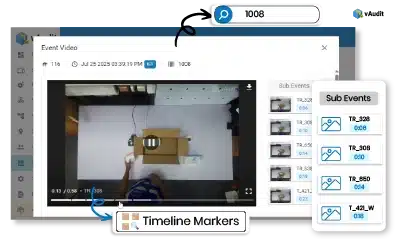
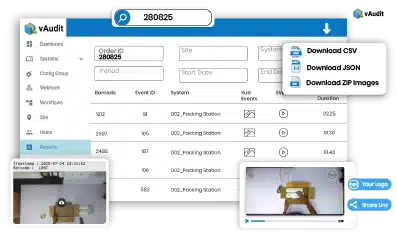
The order ID-linked videos from the vAudit returns validation video system is already used by customers to retrieve exact shipment footage without long CCTV searches. Their testimonial reflects the recording, search, and evidence retrieval experience that also supports return inspection workflows.
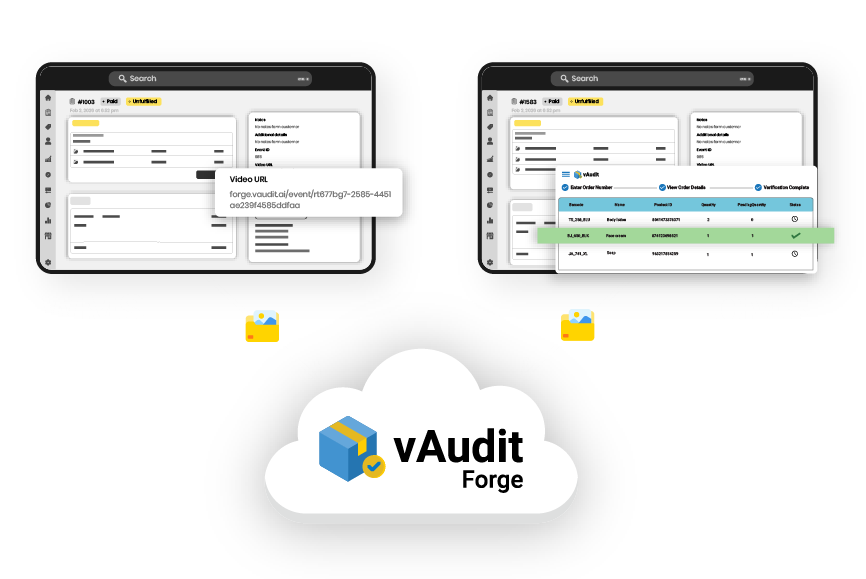

SOC 2 certified cloud platform
vAudit Forge is a SOC 2 certified cloud platform with role-based access and activity logs. Your order packing video and additional images are stored with enterprise level security.
A returns validation video system records the physical inspection of a customer return and stores the footage against the RMA, order ID, or other return reference. The recording shows what was inside the parcel, what condition the item was in, who inspected it, and what they decided before the return moved on.
Three things separate it from a camera pointed at a bench.
The recording is bound to a return identifier, so anyone can pull the exact clip by typing a number instead of scrubbing a timeline. Capture starts and stops with the grader’s action, usually on the RMA scan, so operators never have to remember to hit record. And each clip carries the metadata a dispute needs: timestamp and the RMA ID.
vAudit adds order packing video recording of the physical return, so the warehouse has evidence of what it actually received and inspected.
It fits at the warehouse inspection stage, after the parcel arrives and is matched to its RMA, before the item is routed to final disposition.
A return typically moves through six stages: authorization, reverse logistics, receiving, inspection and grading, disposition, and then the refund or inventory update. Reverse logistics is organised around evaluation rather than movement, because items come back with incomplete information, variable condition, and more than one possible outcome. Inspection is where those unknowns get resolved.
That makes it the highest-leverage place to record. Everything upstream is already documented by carriers and returns platforms. Everything downstream depends on a judgement made at the bench: is this the right item or what condition is it in. Recording the inspection captures the one step where a person decides something that money depends on.
The video does not replace the decision. It documents it, so the decision can be reviewed later without the item being re-handled.
It should show enough to explain what arrived and how it was assessed. Recording starts before the parcel is opened and runs through the inspection in one continuous take, because evidence that begins after the box is open answers the wrong question.
At minimum, the recording should cover:
Two rules matter more than the list. Keep it in one take, because a cut is the first thing a reviewer will point at. And keep the return ID visible or scanned at the start, because a perfect video that cannot be tied to a specific RMA is a video of an anonymous box.
Empty box and short-count returns. The customer says they packed it. The warehouse says the box was empty. Without footage, this is one person’s word against another’s, and the refund usually goes out. The National Retail Federation’s returns research found that among retailers tracking return fraud, 65% reported increases in empty-box returns and 71% reported increases in overstated return quantities.
Item swap and decoy returns. A cheaper, older, or already-broken unit comes back in the original packaging. NRF found 64% of retailers reported increases in decoy returns such as counterfeit items. Swaps are invisible without serial capture and obvious with it.
Wardrobing and used-as-new. An item comes back worn, washed, or installed, and the customer disputes the condition call. The inspection video is the condition call.
Brand and 3PL disagreements. When a 3PL grades a return and the brand disputes the outcome, the argument usually runs on notes and memory. Footage bound to the RMA turns it into a two-minute review.
Chargeback representment. Card network disputes over defective or not-as-described merchandise require the merchant to show what was actually sent and received.
High-value and serialized returns need a reliable video proof of inspection, because confirming the right product category is not enough. The inspection has to show the exact unit that came back: serial number, model, variant, security seal, accessories, and any visible damage.
When a returned unit cannot be identified individually, the strongest claim a brand can make is that the box looked wrong. When the serial is bound to the order at dispatch and read again at inspection, the claim becomes specific: this order shipped unit X, and unit Y came back. That is a verifiable mismatch rather than a receiving agent’s opinion, and it is the difference between a rejected claim and an approved one.
This matters most for electronics, watches, jewelry, collectibles, and high-ticket goods, where two units look identical but carry different serial identities and different condition histories. It also matters for anything with a data or compliance obligation attached, where chain of custody must hold at serial level from pickup through final disposition.
Operations where returns are a repeatable bench process rather than an occasional exception. In practice that means roughly 50 or more returns a day, or any volume where returns run across multiple benches, shifts, or sites.
Three profiles get the most out of it:
3PLs running returns for multiple brands. Each client has different grading criteria and different tolerance for disputes. Recorded inspections keep grading consistent across benches and give the account team something to send when a brand questions an outcome.
D2C and ecommerce brands with in-house returns. The problem here is usually restock accuracy rather than fraud. When grading swings by operator, good inventory gets liquidated and damaged inventory gets restocked and returned again.
Marketplace sellers. Several platforms now treat order-linked video as the primary evidence requirement for seller protection claims, not as supporting documentation. Claim windows are short, often 24 to 72 hours from return receipt depending on the platform and category, so evidence has to already exist when the claim is filed.
Category matters as much as volume. Serialized goods, apparel, electronics, collectibles, and anything with accessories or multi-part kits produce disputes at a higher rate than a single-SKU consumable business.