Case Study Summary
A high-volume quick commerce retailer running centralized pack stations, where speed is everything and delivery SLAs leave almost no buffer.
Orders flowed in cleanly from the OMS and moved on to routing, but the final packing step relied on visual checks and human memory under pressure.
Wrong SKUs and missed items weren’t caught in the moment. They showed up later as returns, re-ships, and constant “wrong item delivered” complaints.
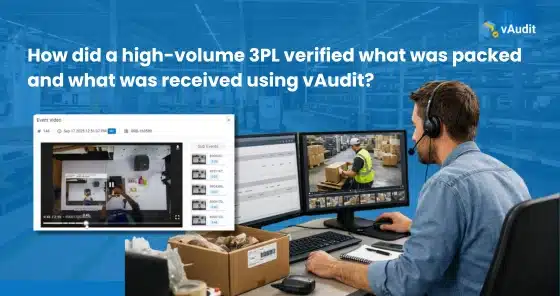
vAudit was placed directly at the pack stations to verify items as they went into the box and quietly capture order-linked video along the way.
Packing errors don’t usually show up as a single big failure. They creep in. One wrong item here. One missed SKU there. Then suddenly returns are up, support tickets pile on, and SLAs feel tighter than they used to.
What was really going wrong at the pack station?
- Reading order lists on screens
- Matching items by sight
- Double-checking under time pressure
- Returns climbed
- Repeat shipments became routine
- Support teams spent more time investigating than resolving
Why didn’t the existing systems catch these errors earlier?
- Orders were accurate
- Inventory was tracked
- SKUs were clean
- Delivery paths were optimized
- Dispatch ran smoothly
- No real-time SKU validation
- No block on overpacking or wrong items
- No proof of what went into the box
Where Do Most Packing Errors Actually Come From?
- Speed matters
- Cognitive load stays high
- Manual judgment fills the gaps
How did vAudit fit into the existing process without disrupting it?
| System | What it continued to do |
|---|---|
|
OMS |
Manage orders, SKUs, inventory |
|
Routing platform |
Handle dispatch and delivery |
|
vAudit |
Control packing, verification, video proof |
What changed when packing became scan-driven instead of visual?
- Orders showed up on the pack screen on their own
- Items were scanned as they went into the box
- SKU and quantity checks happened in real time
- The system stepped in only when something was wrong
- Labels printed and the order moved on
| Task | Before | After |
|---|---|---|
|
Finding orders |
Manual search |
Auto-loaded |
|
Item checks |
Visual |
Barcode validation |
|
Catching mistakes |
After shipping |
During packing |
|
Completing orders |
Manual updates |
Automatic |
|
Handoff to routing |
Manual |
Instant |
Why did order-linked video proof matter more than expected?
- Every packing session was video recorded
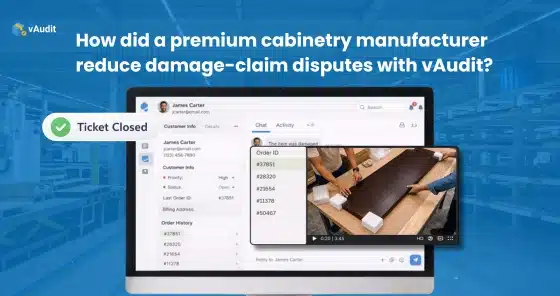
- Footage was time-stamped and tied to order IDs
- Support could see exactly what was packed
- QA could audit random or flagged orders
What did the numbers actually look like?
Results Snapshot
| Metric | Change |
|---|---|
|
Picking and packing errors |
95% reduction |
|
Packing time per order |
66% faster |
|
Returns and escalations |
Noticeably lower |
|
Throughput per station |
Higher without new hires |
What That Meant Day to Day
- More orders per station, per hour
- Fewer fire drills during peak windows
- Less rework and fewer repeat shipments
- Support teams freed from constant investigations
How was vAudit rolled out without slowing operations?
- Integrate with existing systems first
- Pilot on a small set of pack stations
- Train packers in short, practical sessions
- Expand gradually once results were clear
Which operations tend to see the biggest impact?
- Order volumes are high
- Packing still relies on visual checks
- Wrong-item complaints show up regularly
- An OMS and routing system already exist
Why do operations teams stick with vaudit?
- Order-linked video proof, not generic cameras
- Real-time verification during packing
- Simple, fast interfaces for packers
- Working with existing systems