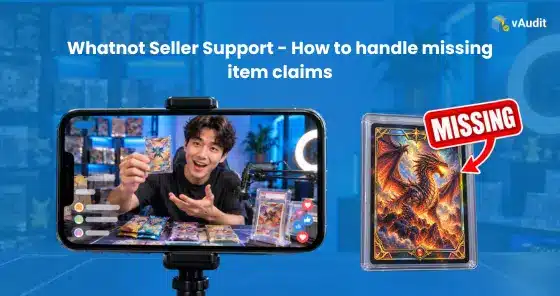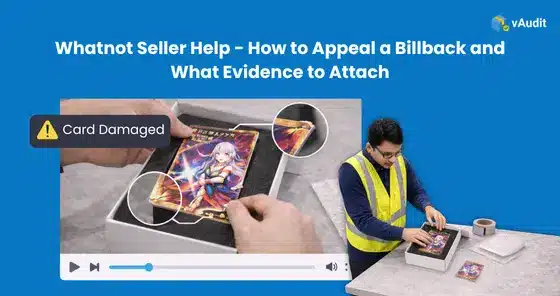
What is Whatnot High-Value Card Protection?
Retain the video for at least 75 days. Whatnot also encourages shipping protection and, for US sellers, Signature Required Delivery which is mentioned in Whatnot High-Value Card Protection policy.
How does a buyer file a High-Value Card Protection claim?
- The order number and a description of the card.
- A photo that identifies the card and the video-on-demand timestamp from the sale.
- The buyer’s estimate of its value, with links to supporting prices.
How does Whatnot calculate market value of a missing card?
When does Whatnot bill back the seller?
Why does video evidence matter for Whatnot High-Value Card Protection billbacks?
With vAudit, you can easily save the packing video proof linked with the order ID. A timestamped item image helps document details such as a card number or slab certification number. For high-value cards, those small details can help distinguish one card from another.
How should you respond when Whatnot Trust & Safety contacts you?
Sellers have two calendar days to respond after Whatnot Trust & Safety contacts them about a missing high-value card. That’s the window to provide fulfillment evidence or resolve issue. If the window passes without a response, Whatnot may resolve the claim and bill back the seller.
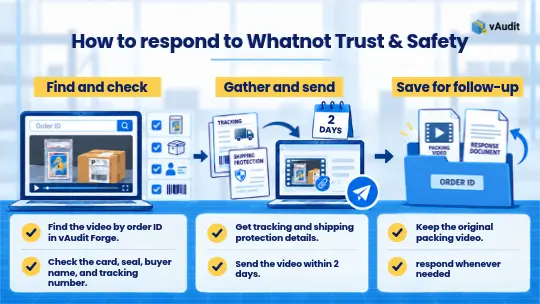
- Search order ID in vAudit Forge.
- Watch the clip to check the card, seal, buyer’s name, and tracking number.
- Gather carrier scans and shipping protection information.
- Reply in the channel Whatnot specifies within 2-day window with relevant footage.
- Keep original video and your response for a follow-up review.
Which packing and shipping steps support high-value card claim?
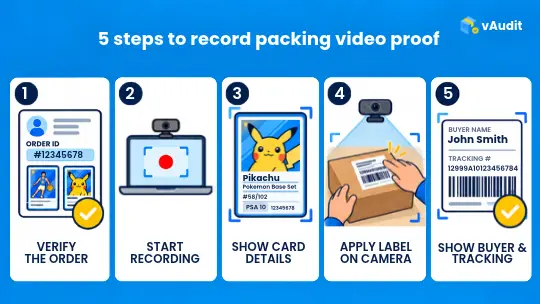
- Check the buyer, order ID, and the cards assigned to that shipment.
- Start recording before card enters its sleeve, top loader, or mailer.
- Hold the card steady enough to read set, card number, grade, or serial detail.
- Keep parcel on camera while you close and seal it, then apply label.
- Finish with a clear coverage on buyer name and tracking number before stopping the recording.
How does vAudit help Whatnot sellers meet High-Value Card Protection rules?
For solo packers, vAudit Desk records videos on a laptop or desktop with a USB webcam. Scan the order ID and the recording starts. With the packing video software, each item scan can capture a timestamped image. That helps when two similar cards sit on the same desk.
How does vAudit make proof easy to share?
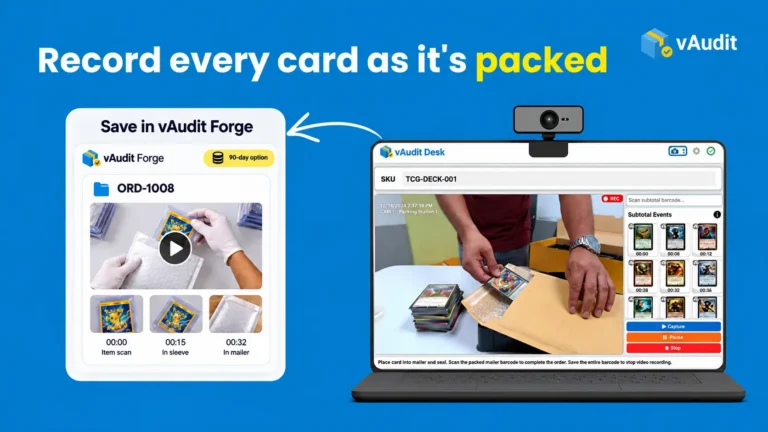
With packing video recording system for Whatnot High-Value Card Protection, choose 90 days so the file stays available beyond the 75-day minimum.
Frequently asked questions on Whatnot High-Value Card Protection
1. How long does a seller have to resolve a missing high-value card claim on Whatnot?
Sellers have to respond within within 2-day window after the buyer raises a claim.Whatnot asks sellers to retain the continuous packing video for at least 75 days.
For a Card Break or Surprise Set seller, that gap is easy to overlook. The buyer may notice a missing card weeks after the live show. By then, you’ve shipped dozens of similar orders, and the show replay alone won’t show which card entered the mailer.
Keep the video saved under the order ID and retain the carrier record alongside it. Check that the footage shows the card, sealing, and labeled package. If Trust & Safety contacts you, the seller response clock is separate: two calendar days from their message. The buyer’s 30-day filing deadline doesn’t extend that seller response window or remove the need for valid proof.
2. Does Whatnot seller protection cover a high-value card lost by USPS?
Yes, Whatnot seller protection cover a high-value card lost by USPS when Whatnot confirms that the carrier caused the delivery failure, it says the seller will not be charged for the buyer’s refund. That does not mean every package marked lost is automatically covered.
Suppose you sealed the correct card, handed the labeled package to USPS, and later the tracking stopped moving. Your packing video documents what left your desk. Carrier acceptance scans and tracking help establish what happened after that. Keep both records together, since neither one tells the whole story on its own.
Whatnot also encourages shipping protection for high-value cards. For eligible US shipments, signature confirmation may apply, and its shipping options can affect how a missing-delivery report is assessed. Before shipping, check the available protection and delivery settings for that order. If a buyer reports non-delivery, follow Whatnot’s instructions and provide the facts you can confirm. Whatnot decides whether the problem was a verified carrier failure.
3. Can a Whatnot seller appeal a high-value card billback?
Yes, whatnot seller can appeal a high-value card billback with Whatnot’s seller protection policy that allows sellers to ask for a review when they believe a refund decision missed important information. An appeal is different from your first response to Trust & Safety, so don’t treat it as a reason to ignore the original two-calendar-day window.
If you believe a billback is wrong, compare the claim with the order record. Look for evidence Whatnot may not have seen, such as a view of the card’s certification number, a carrier acceptance receipt, a tracking update, or a message that changes the timeline. Keep the footage unchanged and explain what each record shows.
Whatnot says each refund decision can be appealed only once, so combine all relevant information before submitting it through the available appeal channel. A complete appeal may help clarify the situation, but it doesn’t automatically reverse the charge. Whatnot makes the final decision after reviewing the added context.
4. What happens if a missing-card claim involves several cards from the same break?
When a missing-card claim involving several cards from the same break, check fulfillment evidence for each affected order. The livestream shows what was pulled, but it doesn’t show which card went into each buyer’s package.
Start by matching each reported card to the buyer and order ID. Then review the packing footage for that shipment. Look for the card details, the card entering the mailer, the sealed package, and the shipping label with the buyer name and tracking number.
With vAudit Desk, scanning an order ID starts the packing recording, and the video is saved under that ID. You can retrieve the clip in vAudit Forge when a claim arrives. Keeping those clips linked with their order IDs makes a break easier to review later.
If Whatnot Trust & Safety contacts you, respond within two calendar days with the relevant footage and carrier records. Whatnot decides the outcome based on the provided evidence.

Superstore

Aura Gold

IQ Pack